The Mystical Symbol of ANKH: Ancient Egyptian Key to Eternal Life
Domain Name For Sale
Introduction to the ANKH
The Ankh (☥), also known as the key of life, the key of the Nile, or crux ansata (Latin for “cross with a handle”), is one of the most recognizable and powerful symbols to emerge from ancient Egypt. Far more than just an ornamental design, the Ankh represents the profound spiritual understanding of an advanced civilization that contemplated existence, death, and rebirth with remarkable depth.
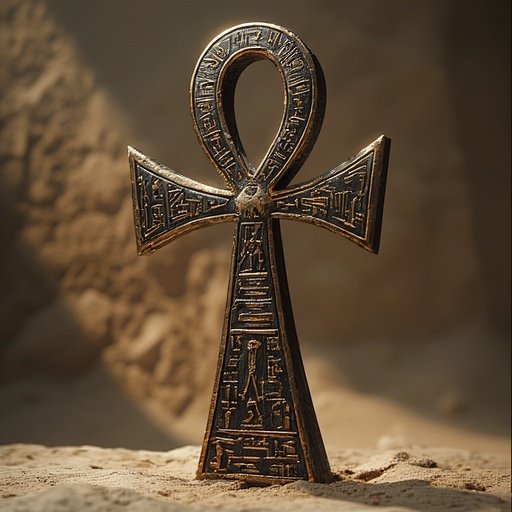

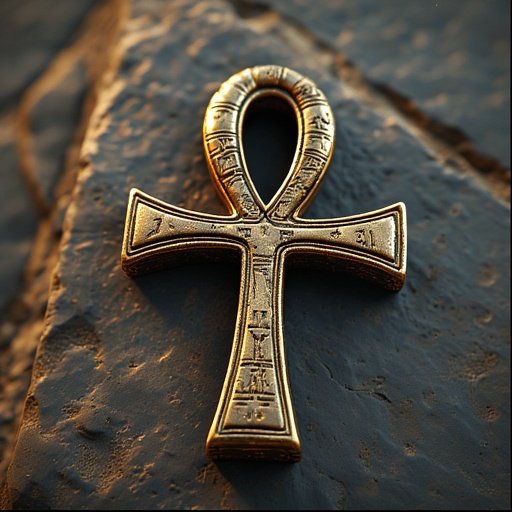

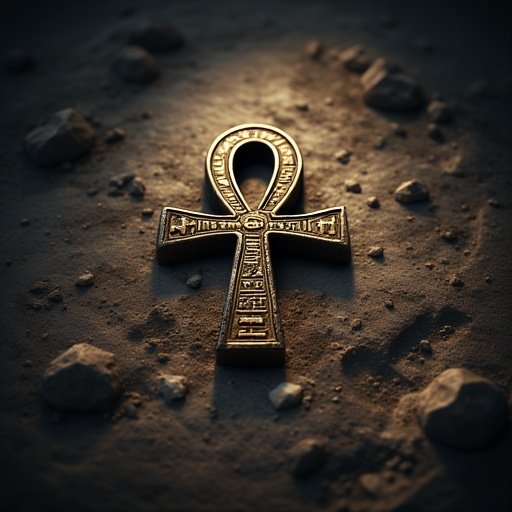
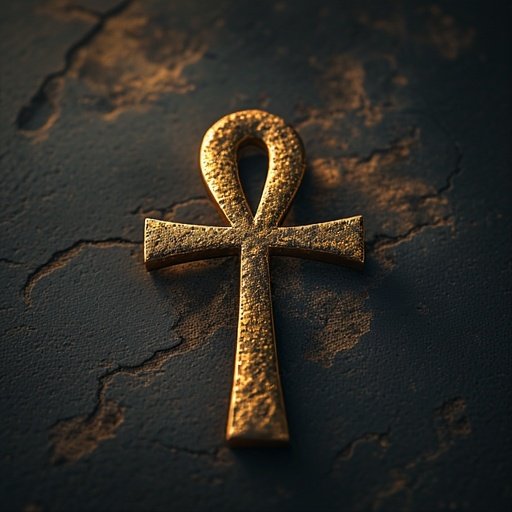
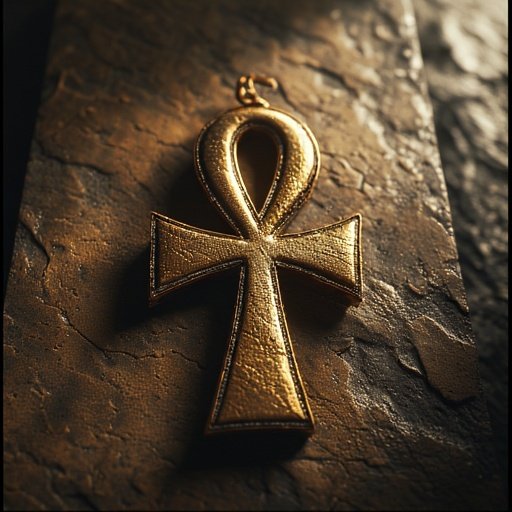
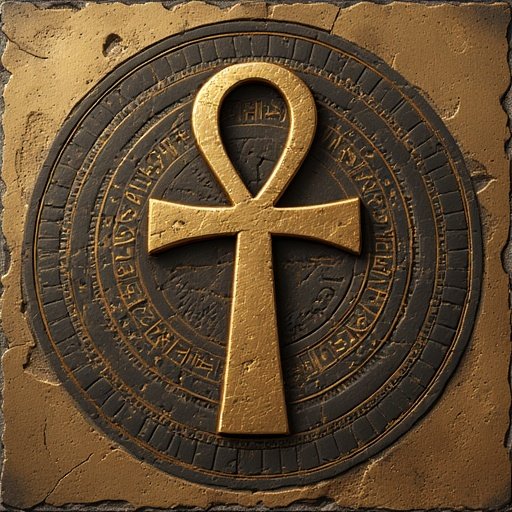
For over 5,000 years, this cross-like symbol with a loop at the top has transcended its original cultural boundaries to become a universal emblem of life, immortality, and mystical wisdom. From the temples of Thebes to modern jewelry, tattoo art, and even contemporary spiritual movements, the Ankh continues to captivate those seeking connection to ancient mysteries.
Visual Description and Etymology
The Shape
The Ankh consists of three distinct elements:
- A teardrop-shaped loop at the top (representing the sun rising over the horizon or the womb)
- A vertical bar descending from the center of the loop
- Two horizontal arms crossing the vertical bar
The shape resembles a cross with a looped top, distinguishing it from the Christian cross. Some scholars note its similarity to the tyet (Isis knot) symbol, though the two have distinct meanings in Egyptian iconography.
The Name
The word “Ankh” (pronounced “ahnk”) comes from the ancient Egyptian word ˁnḫ, which literally means “life,” “to live,” or “living.” In hieroglyphic writing, the Ankh symbol itself was used to write these words, making it both an ideogram and a phonogram representing the sounds “kh” and “n.”
Historical Origins and Archaeological Evidence
Predynastic Period (c. 6000-3150 BCE)
The earliest known representations of the Ankh appear during the Predynastic period on:
- Ceramic vessels from the Naqada culture
- Cosmetic palettes used for grinding minerals
- Rock carvings in remote desert locations
These early examples suggest the symbol’s origins predate the dynastic period, emerging when Egyptian religious concepts were first being codified.
Old Kingdom (c. 2686-2181 BCE)
By the Old Kingdom, the Ankh was firmly established in Egyptian iconography. It appears prominently in:
- Pyramid Texts – the oldest religious writings in the world, inscribed in the pyramids of Saqqara
- Tomb reliefs of pharaohs and nobility
- Funerary objects including sarcophagi and canopic jars
The Pyramid Texts contain multiple references to the Ankh as the “life-giving breath” that allows the deceased king to ascend to the stars and join the gods.
The Deeper Spiritual Meaning
Physical Life
At its most basic level, the Ankh represents the breath of life – the vital force that animates all living beings. Ancient Egyptians believed that humans consisted of several spiritual components:
- Ka – the life force or vital essence
- Ba – the personality or soul
- Akh – the transformed spirit that could move between worlds
The Ankh was closely associated with the Ka, which survived death and required sustenance through offerings depicted as Ankh symbols.
Eternal Life and Immortality
More profoundly, the Ankh symbolizes the Egyptian understanding of immortality – not merely living forever in physical form, but transcending death to become an Akh (blessed spirit). This transformation required:
- Proper mummification techniques
- Recitation of correct spells from the Book of the Dead
- Living a life aligned with Ma’at (truth, balance, order)
- The judgment of the heart before Osiris
The loop of the Ankh was often interpreted as representing the sun disk rising above the horizon, symbolizing:
- Daily rebirth of the sun god Ra
- The cyclical nature of existence
- The eternal return of life after death
The Union of Opposites
The Ankh embodies the Egyptian understanding of duality and synthesis:
- The loop represents the feminine principle (womb, moon, receptive energy)
- The cross represents the masculine principle (phallus, sun, active energy)
- Together, they represent the sacred marriage of opposites necessary for creation
This interpretation connects the Ankh to other mystical symbols like the Taoist Yin-Yang and the Hindu Lingam-Yoni, suggesting a universal recognition of complementary forces in creation.
The Ankh in Egyptian Religious Practice
Symbol of the Gods
Numerous Egyptian gods and goddesses are depicted holding the Ankh, including:
- Isis – the great mother goddess, healer, and magician
- Osiris – god of the afterlife, resurrection, and fertility
- Ra – the sun god, creator of all life
- Hathor – goddess of love, music, and joy
- Anubis – guide of souls through the underworld
- Thoth – god of writing, wisdom, and magic
In temple reliefs, gods are often shown extending the Ankh to the pharaoh’s nose, symbolically giving him the “breath of eternal life.” This gesture, known as the “presentation of life,” was among the most sacred rituals in Egyptian ceremonial art.
Funerary Context
The Ankh’s most powerful significance emerges in funerary contexts. Tomb walls, coffins, and burial goods prominently feature the symbol because:
- It protected the deceased’s vital organs (often shaped as Ankh amulets placed on the mummy)
- It ensured the heart would speak truthfully during judgment
- It guided the soul through the Duat (underworld) toward resurrection
- It marked the location of offering tables where sustenance was provided
The Book of the Dead (Chapter 30B) specifically instructs placing an Ankh amulet of green stone on the deceased’s heart to prevent it from betraying them before Osiris.
Temple Rituals
In living temples, priests used the Ankh in daily purification rituals:
- Water was poured through Ankh-shaped vessels to “give life” to the temple
- Incense was burned before Ankh symbols to carry prayers to heaven
- The high priest carried a ceremonial Ankh during processions
The ANKH as a Hieroglyph
In the Egyptian writing system, the Ankh served multiple functions:
As an Ideogram
It represented the concept of “life” in its entirety, similar to how the heart symbol represents love today.
As a Phonogram
The Ankh represented the two-consonant sound ˁnḫ (usually transliterated as “ankh” or “onkh”).
In Royal Names
Many pharaohs incorporated the Ankh into their throne names, including:
- Ankhkheperure (Akhenaten’s co-regent)
- Ankhnesmeryre (a queen of the 6th Dynasty)
- Tutankhamun – whose name means “Living image of Amun”
The ANKH in Other Ancient Cultures
Beyond Egypt, the Ankh spread throughout the ancient world, appearing in:
Nubia and Kush (Modern Sudan)
The Kingdom of Kush adopted the Ankh into their own religious practices, fusing it with local beliefs about kingship and divine authority.
Minoan Crete
Archaeologists have discovered Ankh symbols in Minoan palace complexes, suggesting trade and cultural exchange between Egypt and the Aegean world.
Phoenician City-States
Phoenician merchants carried the Ankh across the Mediterranean, introducing it to Carthage, Sicily, and Sardinia.
Early Christianity
Coptic Christians (Egyptian Christians) adopted the Ankh as the Crux Ansata, modifying its meaning to represent eternal life through Christ. Some of the oldest Christian churches in Egypt combine the Ankh with the Chi-Rho symbol.
Revival in Modern Spirituality
19th Century Egyptomania
The Ankh experienced a major revival during the 19th century when:
- Napoleonic expeditions brought Egyptian artifacts to Europe
- The discovery of Tutankhamun’s tomb (1922) created global fascination
- Theosophical societies incorporated the Ankh into their symbolism
- Aleister Crowley and the Hermetic Order of the Golden Dawn used the Ankh in ceremonial magic
Modern Paganism and Occult Traditions
Contemporary spiritual traditions that utilize the Ankh include:
- Kemetic Orthodoxy – a revival of ancient Egyptian religion
- Wicca – as a symbol of eternal life and spirit
- Thelema – Crowley’s religion where the Ankh represents the union of spirit and matter
- New Age movements – as a general symbol of spiritual awakening
African Diaspora and Black Liberation
The Ankh gained particular significance during the Civil Rights movement and continues to represent:
- African heritage and pride in pre-colonial Egyptian civilization
- Black consciousness movements worldwide
- Pan-Africanism as a unifying symbol
- Afrofuturist art and literature
Musicians, artists, and public figures from Erykah Badu to Lauryn Hill have worn the Ankh to celebrate African identity and spiritual connection.
The ANKH in Contemporary Culture
Jewelry and Fashion
The Ankh has become one of the most popular mystical symbols in fashion:
- Gothic subculture – representing darkness, death, and transcendence
- Hip-hop culture – symbolizing authenticity, life, and resistance
- Tattoo art – among the top ten most requested symbolic tattoos globally
Music and Entertainment
Notable uses of the Ankh include:
- The band KISS – Peter Criss used an Ankh as his personal symbol
- Death metal bands – incorporating the symbol into album art
- The film “The Mummy” (1999) – featuring the Ankh as a plot device
- Video games – from “Assassin’s Creed Origins” to “Destiny 2”
Corporate and Organizational Logos
Companies and organizations using variations of the Ankh include:
- ANKH TV (your platform) – representing life-focused content
- Various organic food companies – symbolizing natural life
- Funeral homes and cemeteries – indicating eternal rest
Scientific and Metaphysical Interpretations
The Ankh and Human Anatomy
Several scholars have proposed that the Ankh resembles the human anatomy:
- The loop represents the skull and brain (seat of consciousness)
- The cross represents the spine with arms extended
- The vertical bar represents the spinal column
Some have connected this to the kundalini energy in yogic traditions, where life force rises through the spine toward the crown chakra (the loop).
The Ankh and Quantum Physics
Esoteric writers have drawn parallels between the Ankh and modern physics:
- The loop representing the wave function (infinite possibility)
- The cross representing collapsed reality (manifest existence)
- The symbol as a whole representing the observer effect
How to Use the ANKH in Spiritual Practice Today
Meditation
To work with Ankh energy in meditation:
- Hold or visualize the Ankh in front of your heart center
- Breathe into the loop imagining inhaling eternal light
- Exhale through the cross grounding life force into the body
- Repeat the mantra
ANKH(AHNK) as a vibrational key - Practice for 11 minutes (the number associated with spiritual mastery)
Altar Placement
Place the Ankh on your altar:
- Facing east (direction of rebirth) for morning practice
- On the left side (receptive/feminine energy)
- Surrounded by crystals like clear quartz or amethyst
- With fresh flowers (symbolizing living vitality)
Amuletic Protection
Wear the Ankh as protection against:
- Physical illness (wear over the heart)
- Spiritual attack (wear on a long chain)
- Negative thought forms (visualize it glowing green)
- Transitional periods (death, birth, major changes)
Common Misconceptions About the ANKH
Misconception 1: It’s the Same as the Christian Cross
Reality: While visually similar, the Ankh predates the Christian cross by at least 2,000 years and represents very different theological concepts (eternal life through natural cycles versus salvation through Christ).
Misconception 2: It’s Only About Physical Life
Reality: The Ankh’s primary meaning in ancient Egypt concerned life after death and spiritual transformation, not merely biological existence.
Misconception 3: It’s a Pagan “Evil” Symbol
Reality: No historical evidence suggests the Ankh was ever used for malevolent purposes. It was universally positive, representing healing, protection, and transcendence.
Practical Exercises for Connecting with the ANKH
Exercise 1: Breath of Life Practice
- Stand or sit in a quiet space
- Visualize a golden Ankh floating before you
- With each inhale, imagine the Ankh’s loop filling with light
- With each exhale, see light flowing down the vertical bar
- Continue for 11 breaths
Exercise 2: Dream Incubation
- Draw or trace an Ankh on a piece of paper before sleep
- Place it under your pillow
- Set the intention: “I dream of the keys to my eternal life”
- Upon waking, record any dreams immediately
Exercise 3: ANKH Walking Meditation
- Walk slowly in a circle or labyrinth
- With each step, trace an Ankh shape in the air with your dominant hand
- Coordinate breathing: up the vertical bar on inhale, across the arms on exhale
- Practice for 11 minutes daily for 11 days
The ANKH as a Business Philosophy (For ANKH TV)
As the namesake of your platform, the Ankh can inform content creation and community building:
Core Values
- Life-affirming content that celebrates existence
- Eternal perspective considering long-term impact
- Cyclical publishing (rebirth of ideas, seasons of content)
- Union of opposites (joy/grief, light/dark, serious/playful)
Content Categories Aligned with ANKH Energy
- Personal transformation stories (symbolic death and rebirth)
- Spiritual practices from ancient traditions
- Healing modalities (physical, emotional, and spiritual)
- Community memorials honoring those who’ve passed
- Nature connection recognizing life cycles
Conclusion
The Ankh stands as perhaps the most sophisticated symbol of life’s mysteries ever created. For over five millennia, this simple yet profound shape has communicated truths that transcend language, culture, and even religion itself. Whether carved into temple walls, tattooed on skin, or displayed as a logo, the Ankh continues to remind humanity of our deepest hope: that life does not end with death, but transforms into something eternal.
The Egyptian understanding, preserved in this elegant symbol, suggests that immortality is not about never dying – it’s about living so fully, so authentically, and so connected to divine order that death becomes merely a transition, not an ending. When you wear, display, or meditate upon the Ankh, you participate in this ancient wisdom, becoming part of an unbroken chain of seekers who have contemplated existence’s greatest mysteries.
As the Egyptian Book of the Dead declares: “Your soul is not bound for the darkness. You shall live again, for you carry the Ankh within your heart.”
Further Reading and Resources
Essential Books
- “The Egyptian Book of the Dead” – translated by E.A. Wallis Budge
- “The Ankh: Meaning of Life” – by Moustafa Gadalla
- “Egyptian Mythology: A Guide to the Gods, Goddesses, and Traditions” – by Geraldine Pinch
- “The Temple in Man” – by R.A. Schwaller de Lubicz
Online Resources
- The Metropolitan Museum of Art – Egyptian collection online
- The British Museum – Digital Egypt for Universities
- Sacred Texts Archive – Egyptian section
Documentaries
- “The Pyramid Code” – Exploring ancient Egyptian science and spirituality
- “Egypt’s Ten Greatest Discoveries” – National Geographic
- “The Mysteries of Egypt” – Smithsonian Channel